
Ants out, and kept out.
A single ant colony can hold millions of workers, and surface sprays only treat the ones you see. We target the source, the queen and the colony, so they stop coming back.
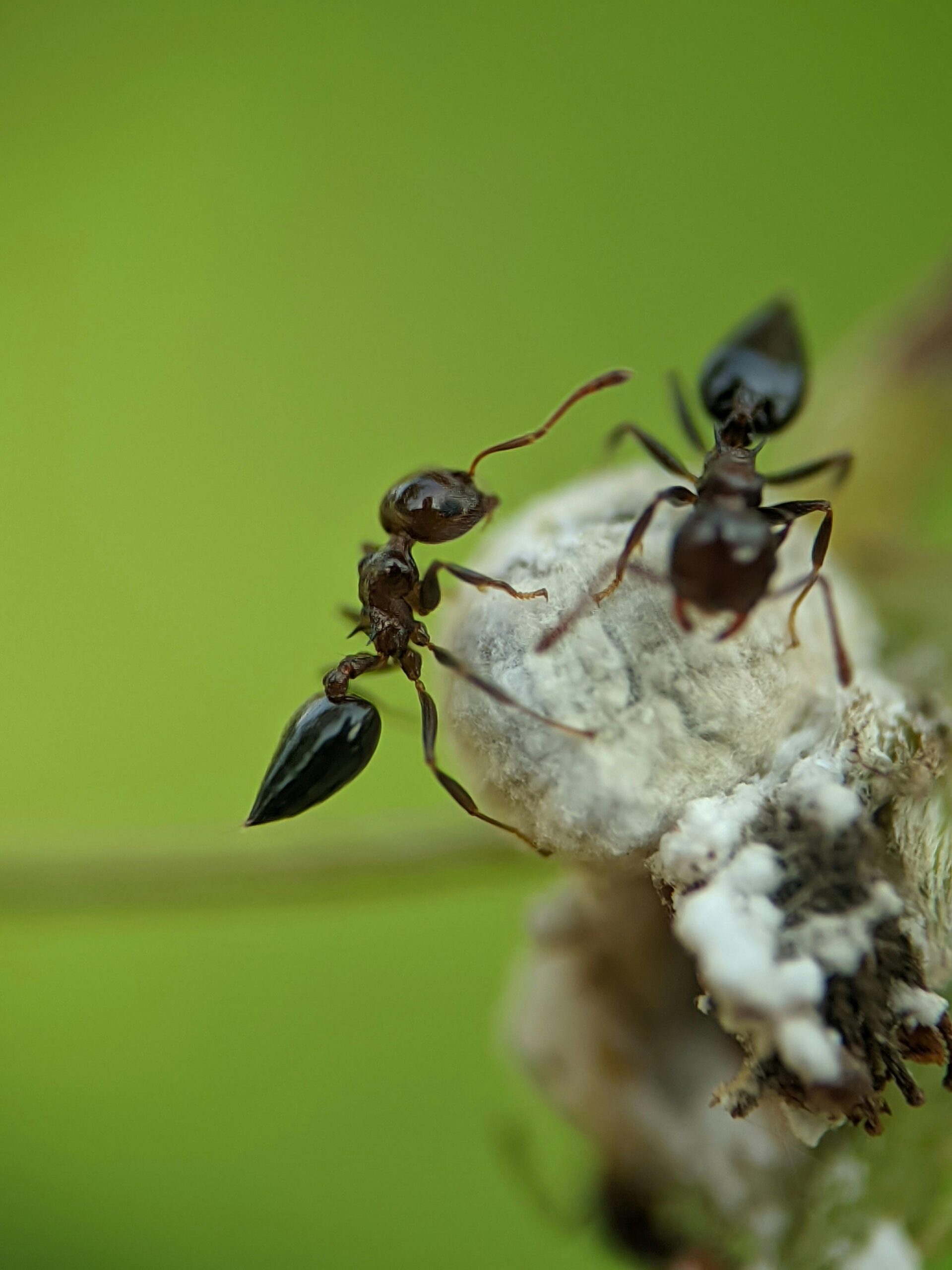
Kill the ones you see, and the rest keep coming.
Chemical trails
Scouts find food and lay pheromone trails. The more ants that follow, the stronger the trail gets, and the more show up.
Food sources
Ants have a sweet tooth, but they also love grease, proteins, and fats. A few crumbs are an open invitation.
Weather and entry points
Rain and heat drive ants indoors, and they slip in through cracks in foundations, walls, and windows.
We go after the colony, not just the trail.
Identify the species
Different ants need different approaches. We identify what you have and find where they are entering and nesting.
Target the queen
We use baits and treatments the workers carry back to the nest, reaching the queen and the colony at the source.
Treat and seal entry points
Pet-safe and family-safe products along trails and entry points, plus advice on the gaps letting them in.
Follow up and protect
Ants are persistent. We follow up to confirm the colony is gone, and if they return between visits, so do we, at no extra cost.
Think you have an ant problem?
Not sure what you are dealing with? Call a RAYMAX Ant Specialist at 800-893-1124 and we'll help you identify the problem and stop it at the source.
What draws them in, and why DIY keeps you in a loop.
The more you understand ants, the easier they are to keep out. Tap any topic to learn more.
Chemical trails+
The journey starts with pheromone trails. Scouts forage for food and, once they find it, lead other ants straight to the source. The more ants following a trail, the stronger the pheromones become.
Food sources+
Ants, like us, need food, and they have a sweet tooth. Sugars are calorie dense and a great food source, but they also like greasy foods, proteins, and fats. A full sweep for food, plus a water and vinegar spray, helps clear them out.
Weather and structural gaps+
Changes in weather can drive ants indoors. Heavy rain pushes them to seek drier spots, like your home, and seasonal shifts make them forage more aggressively. Cracks or gaps in your foundation, walls, or windows give them an easy way in.
Can I do it myself?+
It depends, how long can you put up with ants? Over-the-counter sprays are just not that effective. A low dose with low residual, inexperienced application, species resistance, and only a lucky shot at ever reaching the nest keeps you in a loop of buying. Often the ants simply find better food outside and you stop seeing them, but the colony remains.
When to call a professional+
If you've spent more than $100 trying to DIY, you've already spent too much. Large or recurring infestations usually mean ants have found a way to thrive in your home unseen. For prevention, a recurring plan protects you year-round, or a strategic one-time spray every 4 to 6 months keeps them at bay.
Answers before you even ask.
Why do ants keep coming back after I spray?+
Are ant treatments safe for my family and pets?+
How long until the ants are gone?+
Do I need a one-time treatment or the monthly plan?+
Take back your kitchen.
Get a free, no-pressure quote in minutes, or call and talk to a real person right now.